If you are planning to ski this winter and want help choosing a greener ski resort, there are several helpful sources of information available.
Tuesday, December 13, 2011
Monday, December 12, 2011
Winter Survival
| Isard (Pyrenean Chamois) |
The animals that live in the high mountains, like the Isard, have a hard time during the winter. As well as the freezing temperatures, snow, strong winds and avalanches, the animals have to contend with food being scarcer and harder to find. A tough life! The animals build up fat reserves during the summer to help them make it through the harsh winter months but not all make it.
A film from Salamandre Films called 'Survive' looks at the dangers the mountain animals face during the harsh winter months. The footage was shot in the Alps but the story the film tells could be applied to any mountain region in winter.
Althoug the film was shot in the Alps, all the animals in the trailer can also be seen in the Pyrenees - except for the Ibex (the animal with the very long horns) which became extinct in the Pyrenees in the late 1990's. No Ibex here unfortunately but there is the brown bear which cannot be found in the Alps. Not much chance of seing all these animals on the prepared ski resort slopes however. You have a much better chance with a Pyrenees Mountain Adventure snowshoeing week.
| Snow Hare Tracks |
Actual
sightings of animals are rare but you will be able to see that you are
surrounded by wildlife from the huge number of prints and tracks in
the snow. During a Pyrenees Mountain Adventure snowshoeing week your
guide can help you to start to identify which prints and tracks are made
by which animal.
Saturday, November 26, 2011
All Things Snow and Avalanche
Today was spent in the Meteo France lecture theatre in Toulouse for my annual refresher on all things snow and avalanche. A great way to prepare for the coming winter season.
Hosted by ANENA (National Association for the Study of Snow and Avalanches), FFME (The French Mountaineering and Climbing Federation) and The French Alpine Club, the 2011 training day was packed with useful, practical information to remind me about and reinforce previously learnt knowledge.
There were particularly good sessions on route choice and the new Meteo France avalanche bulletin which will appear from December 12th this year. Another good talk was given by a member of Mountain Rescue on avalanche rescue.
Wednesday, November 16, 2011
Bear Cubs Are Named
The 4 bear cubs born in the Pyrenees in 2010 now have names. 33, 000 people suggested names via the internet and from these a shortlist of 26 was chosen. A jury was put together to choose from the shortlist.
The 2 female cubs of Bambou et Pyros are called Floretta (Little Flower) and Fadeta (Little Fairy.)
The daughter of Caramelle and Pyros is called Plume (Feather), and their
son, Pelut (either Hairy or Wanderer.)
Sun, Snow And Snowshoeing
It has arrived - snow! Not in huge quantities but there was enough of it in the Eastern Pyrenees near Aston in the Ariege to spend a weekend snowshoeing.
The first day was spent ascending the Seignac Valley towards the Col du Sal. Snowshoes were necessary above 2000m.
At the Col du Sal (2480m) there were impressive views across to the Pic de Thoumasset (2741m).
The return was made by the Soulanet Valley and the Sabine Valley.
The next day was an ascent of the Pic de la Sabine.
On the descent from the Pic de la Sabine, the group were able to look across towards the previous days highpoint - the Col du Sal. An impressive cloud bank was stopped on the French/Andorran
border.
Despite the winter landscape, colour was still evident below the snowline. There were the browns and golds of the leaves of the deciduous trees but also the purple of the many crocuses in flower.
Most colourful was the bright red of a fly agaric.The mushroom is poisonous but deaths are rare. In the Middle Ages it was apparently used as a fly killer when sprinkled in milk.
Most surprising was the high number of Pyrenean Gentian to be found. They are normally in flower in July and August!
On both days the group had the mountains to themselves - we saw no one. The second day we briefly shared our patch of mountain territory with a herd of isard. Snowshoes do not require prepared pistes or ski resort uplifts. Quiter, hidden coners of the winter mountain environment can be discovered far from the hustle and bustle of the ski resorts.
2 of the group had never snowshoed before but did not take them long to get used to the snowshoes. If you are thinking of a Pyrenees Mountain Adventure snowshoe week and are worried because you have never snowshoed - don't be! Remember, if you can walk, you can snowshoe!
The first day was spent ascending the Seignac Valley towards the Col du Sal. Snowshoes were necessary above 2000m.
| Snowshoeing Towards the Col du Sal. |
| Pic de Thoumasset from the Col du Sal. |
The next day was an ascent of the Pic de la Sabine.
| Making Fresh Tracks Descending From Pic de la Sabine |
| Cloud bank on the French/Andorran Border. |
| Autumn Crocus |
| Fly Agaric. |
| Pyrenean Gentian |
2 of the group had never snowshoed before but did not take them long to get used to the snowshoes. If you are thinking of a Pyrenees Mountain Adventure snowshoe week and are worried because you have never snowshoed - don't be! Remember, if you can walk, you can snowshoe!
Monday, November 7, 2011
On This Day 7th November 1659
On the 7th November 1659 the Treaty of the Pyrenees was signed between France and Spain on neutral ground in the Basque Pyrenees. The signing took place on Pheasant Island, a river island on the border between the countries.
The treaty ended the war at the time between France and Spain, with Spain agreeing to give up Northern Catalonia to the French crown. The area in the map above which is dark green became French except for the tiny white area (to the right and below the a in Andora.) This is Llivia and it remains Spanish even though it is in France and surrounded by French territory. The enclave of Llivia exists because in the 1659 Treaty, Spain agreed to give up only villages and at the time Llivia was considered a city due to its stature as capital of Cerdanya!
Although part of France since 1659, Northern Catalonia still has strong links with the language, culture and traditions of Catalonia. Catalan is still spoken by many for example and all signs are in Catalan and French. As you would expect, mMany of the names of places on the walking maps are in Catalan.
Here is the sign for the Catalan Pyrenees Regional Nature Park (in French and Catalan) where Pyrenees Mountain Adventure runs guided summer walking and winter snowshoeing holidays. You can see the Little Yellow Train on the logo of the park.
![]() |
| Map Showing The Northern Part of Catalonia Which Became French |
![]() |
| Map Showing Llivia |
| Medal Commemorating The Signing of the Treaty |
Here is the sign for the Catalan Pyrenees Regional Nature Park (in French and Catalan) where Pyrenees Mountain Adventure runs guided summer walking and winter snowshoeing holidays. You can see the Little Yellow Train on the logo of the park.
Tuesday, November 1, 2011
On This Day November 1st 2004
| Wild Boar |
![]() |
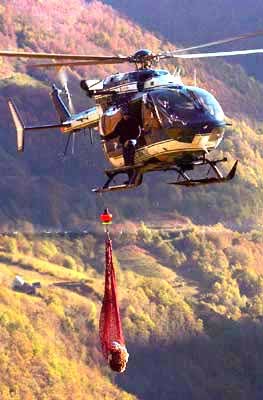
| The Lifeless Body Transported Away |
| Bear Sculpture, Axat |
Subscribe to:
Posts (Atom)