Showing posts with label Top 10's. Show all posts

Wednesday, December 18, 2013

Top 10 Eco Friendly Outdoor Gear Christmas Present Ideas

Do you enjoy walking and back packing in the great outdoors? Are you concerned about sustainability and protection of the environment?  What eco-friendly outdoor gear should be on your Christmas wish list? The Pyrenees Mountain Adventure team have put together their top 10.

1. Caldera Cone Stove  (Trail Designs)
 

Similar in design to the Trangia meths stove but smaller and lighter. In summary, the Caldera System includes the cone specifically sized to fit your pot and provide maximum stability and wind protection. The stove runs on meths not gas. A meths bottle can be recycled but a gas canister cannot and will end up as land fill. Boil times are slower than gas burners but the stove is silent. The design is very simple (with very little to break) and therefore long lasting.

2. Fire Steel Fire Starter. 

 Model: Swedish FireSteel 2.0 scout  

No need for matches or lighters with a fire striker. Small shavings are torn off the rod with a hard, sharp edge of the supplied metal scraper. These shavings are very hot and perfect for igniting a gas or meths stove.  Very simple design (with very little to break) and therefore long lasting.
   

3. Walking Boots (La Sportiva)
 
La Sportiva boots are made in Italy so labour standards are likely to be higher than average and there are less product miles for the product to travel from factory to European market. The company has a strong commitment to sustainability having achieved Environment Certification ISO 14001. To gain this certification, the business must demonstrate that it meets a range of criteria aimed at reducing the negative effects of the production process and therefore the environmental footprint of the business.

4. Waterproof jacket and trousers (ebay patagonia)
Buying anything that has previously been used reduces resource use (energy, water, crude oil etc). The damage has already been done. Giving an item a second life also means that the item does not end up as land fill in a rubbish dump. Patagonia has teamed up with ebay to make it much easier to buy and sell used Patagonia clothing and gear. 'The greenest product is the one that already exists'.


5. Shirt (Patagonia)
http://www.patagonia.com/tsimages/52180_745.fpx?wid=1000&hei=1000&ftr=8&effect=dropshadow,0x000000,10,8,120,8&cvt=jpeg
A superlight long-sleeved shirt. Its ultralight blend of moisture-wicking 65% all-recycled polyester and 35% organic cotton provides big-time ventilation and 15-UPF sun protection.  

At Patagonia the recycled polyester comes from used drinks bottles, unusable second quality fabrics and worn out garments. These don't end up in as land fill in a rubbish dump and producing the shirt using recycled polyester requires less energy, water and crude oil.

Since 1996, Patagonia has only used organic cotton. Conventional cotton production is chemical intensive. Fully 10 percent of all agricultural chemicals in the United States are used to produce cotton, grown on just one percent of all major agricultural land. Research shows that extensive and intensive use of synthetic fertilizers, pesticides, herbicides, soil additives and defoliants pollutes and degrades  the soil, water, and air. It also harms agricultural workers, nearby residents and other animals. Organic cotton is produced using techniques that are healthier and safer for the environment and people.

6.  Socks (Teko)
The socks are made in the USA from organic merino wool or  EVAPOR8 recycled polyester fiber which is made from 100% post-consumer waste, like plastic bottles. The factory is 100% wind-powered and there is a lifetime guarantee on the product. Processing of the wool is chlorine free and the dyes used are non toxic.

Storm


7. Waterproofing Product (Nikwax)


When it rains does the rain on your waterproof  not 'bead up'? Does the fabric soak up rain? Before buying a new jacket, try Nikwax TX Direct. Wash your waterproof in a washing machine with Nikwax TX Direct and add durable water repellency and revive breathability.

8. Sleeping Bag (Mammut Ajungilak)


The insulating filling and the inner and outer materials of the Kompact Recycled are all made from recycled PET bottles with the sleeping bag offering the same insulation values as its traditional brother and weighing just 50 grams more. It takes around 40 bottles to produce the Kompakt Recycled. Using the plastic from the bottles means around 50 percent less energy is required to produce this sleeping bag and .  When it comes to its details and design, this environmentally friendly sleeping bag is no different to its traditional counterparts.


9. Portable Solar Charger. (PowerMonkey from PowerTraveller)
 

Charge up your mobile devices with a portable solar charger.

10. Back Pack (Fjällräven)
 
Kajka 65 

All the Fjallraven backpacks in the Kajka range have a wooden frame.The aluminium frame has been replaced by birch which has reduced the carbon footprint of the backpack by 90%.


To be environmentally friendly as possible when choosing outdoor kit remember Reduce, Repair, Reuse and Recycle. 

Reduce. First of all reflect on whether you really need the item. If you don't really need it, then don't buy it! By reducing your consumption there is less demand on scarce resources. 
Repair. Is it possible to repair the item? Choose an item that has a lifetime guarantee. Patagonia has one as does Teko. Waterproof jackets can be reproofed using products like Nikwax. Choose items that are easy to repair.
Reuse. Try and choose 'previously enjoyed' products rather than brand new ones. If you buy items that have previously been used, the damage from the production of the item has already happened. Patagonia in conjunction with ebay have set up an e-outlet for used Patagonia clothing and gear to make this easier.
Recycle. Choose items that are made from recycled materials and can themselves be easily recycled. A plastic meths bottle can be recycled but a gas canister cannot.

If you must buy new, try and choose items:
  • made from natural fibres e.g. organic cotton and wool. 
  • made from recycled materials that can be recycled themselves.  
  • made in Europe or the US
  • made by companies with Environment Certification ISO 14001 and/or EMAS (Eco-Management and Audit Scheme.)
  • made by companies with a named person in charge of Corporate Social Responsibility/ Environmental Care. 
  • made by companies who each year, produce and make available on their website, a Sustainability Report, or something similar, with goals to achieve and progress towards attaining those targets. 
  • made by companies that ‘give something back’ in terms of supporting organisations through donations of money or equipment. 
  • made by companies who operate a recycling scheme which encourages the recycling of the company's products.

Thursday, November 7, 2013

Chemin de la Liberté/Freedom Trail -Top 10 Magic Mountain Moments (Summer 2013)

Yesterday it was grey and overcast and the rain did not stop. I found myself thinking back to the Pyrenees Mountain Adventure treks this summer along the Chemin de la Liberté/Freedom Trail. Four groups attempted to cross the Pyrenees mountains and everyone who started made it into Spain.

Here are my top 10 favourite magic mountain moments from the four treks. They are in no particular order:

1. The Border Crossing. Starting from St Girons, the border is crossed on day 4. After much effort, hardship and determination we are at the border and can pass from France into Spain. A great moment for everyone who made the crossing.

The Dos group from Holland celebrate reaching the French/Spanish border. Freedom is very close...


2. Polly Bagging. Sliding down a safe snow slope using a large plastic bag as a tobogan. This was great fun and an ideal way to release the tension that had built up descending the steep snow slope directly below the border.


3. Louis Barrau Memorial. Killed by the Nazis aged 18, a memorial has been erected by the barn where he was shot. Someone picked wild flowers from the meadow next to the barn and placed them on the memorial. They had a son of similar age. A beautiful gesture in a beautiful setting.

Great view across to the high Pyrenees from near where Louis Barreu was killed.


4. The Scenery. It is not just the spectacular scenery of which there is plenty.......

Mont Valier dominates the high mountain stages of the Chemin de la LIberté (Freedom Trail)


.........it is the group finding the time to stop, look up and enjoy the views. To soak up the scenery they were immersed in.


Soaking up the scenery towards the end of the Freedom Trail (Chemin de la Liberté)


5. The Silence. Ten minutes silence at the border. No wind, no words. Time too reflect. 'Find beauty; be still.' We had. We were.


The view back into France showing the route of the Freedom trail (Chemin de la Liberté) as it climbs up to the border


6. The Shadows. Griffon vultures flying above us, close enough to cast shadows that raced across the ground where we were.


7. The Summit. Only one group chose the optional extra day at Refuge Estagnous to ascend Mont Valier which dominates day 3 and 4 of the trek. The weather was grey and overcast. Visibility was poor and it was cold. Having reached the summit, the clouds parted and for a short time we were rewarded with tremendous views.

Summit view from Mont Valier the mountain that towers above the Estagnous Refuge and the route of the Freedom Trail (Chemin de la Liberté)


A Pyrenees Mountain Adventure group on the summit of Mont Valier


A similar thing happened with the same group the day before. Starting out in poor weather, we eventually find ourselves above the cloud and out of trouble.

8. The Support. The Chemin de la Liberté/Freedom Trail  is tough. It was great to see the shared hardship brings people together. I saw new friendships form and old friendships strengthened. I saw kindness and care. People helping each other through difficult times - whether a difficult section of path, a drop in morale or fatigue.

9. The Storm. At Refruge Estagnous, which is spectacularly located in the high mountains, the sunsets can be unforgettable. What was more memorable for me happened after most people had returned inside after the sun had set. In the fading light, far in the distance, dark storm clouds were being illuminated from inside by lightning but because of the distance the thunder could not be heard.

10. The Omelette. At the Gite de Rouze I had an omelette with wild, girolle mushrooms picked from the local forest. I know that at the end of a hard days walking any food tastes good but the best omelette ever!

Thanks to everyone who trekked with Pyrenees Mountain Adventure along the Chemin de la Liberté/Freedom Trail in 2013. It was a pleasure to share the journey with you.

Friday, March 15, 2013

Top 10 John Ruskin Quotes


The Spirit of Adventure Foundation 'Pure Adventure' weekend recently took place at Brantwood House. Brantwood is spectacularly located overlooking Coniston Water with views towards Coniston village and the high fells above including The Old Man of Coniston. 

The View Across Coniston Water From Brantwood.
John Ruskin (1819 - 1900) lived at Brantwood House for the last 27 years of his life. Ruskin was a writer, painter, art critic, social reformer and philanthropist. His writing was hugely influential being an inspiration for the first Trade Union leaders, the Arts and Crafts Movement, the founding of the National Trust, and the Society for the Protection of Ancient Buildings. His ideas led to improvements in working conditions, housing, health care and the quality of the natural environment.
Ghandi read Ruskin's 'Unto This Last' and it changed his life.  
 " I translated it later into Gujarati entitling it ‘Sarvodaya’ (the welfare of all). I believe that I discovered some of my deepest convictions reflected in this great book of Ruskin and that is why it so captured me and made me transform my life.”
                                 - Mahatma Gandhi 
Many of Ruskin's thoughts on the problems of the Victorian era - like the negative empact of unbridled capitalism, remain current today.
Ruskin Self Portrait
 
1. Modern travelling is not travelling at all; it is merely being sent to a place, and very little different from becoming a parcel

2. The first test of a truly great man is in his humility.            

3. A little thought and a little kindness are often worth more than a great deal of money

4. Every increased possession loads us with new weariness                    

5. When love and skill work together, expect a masterpiece

6. When a man is wrapped up in himself, he makes a pretty small package.

7. Let us reform our schools, and we shall find little reform needed in our prisons

8. Sunshine is delicious, rain is refreshing, wind braces us up, snow is exhilarating; there is really no such thing as bad weather, only different kinds of good weather. 

9. There is no wealth but life.
10. Do not think of your faults, still less of other's faults; look for what is good and strong, and try to  imitate it. Your faults will drop off, like dead leaves, when their time comes. 
11. Quality is never an accident. It is always the result of intelligent effort.
 

Sunday, November 18, 2012

Top 10 Mushroom Mistakes

Autumn is the best time for mushrooms in the Pyrenees. Those that are edible like the girolle are a great addition to omelettes or sauces. Those that are poisonous, like the Fly Agaric, can cause health problems and sometimes death. It is obviously important to distinguish between the two groups.

There are several falsehoods regarding mushrooms that don't help pick the edible from the poisonous. Here are my top 10.

1. All black mushrooms are poisonous. The Horn of Plenty, which is black and is called The Trumpet of Death in French, is in fact edible.

Horn of Plenty (Photo: Wikipedia)

2. All white mushrooms are edible. The mushroom below which is all white and resembles the commonly eaten button mushroom is in fact poisonous.

Destroying Angel


3. Slugs only eat edible mushrooms. Slugs will eat any mushroom.

4. Cooking a poisonous mushroom will make it edible. Poisonous mushrooms remain poisonous even after cooking.

5. Edibel mushrooms only grow in pine forests. Edible mushrooms grow in a variety of terrain.

6. All edible mushrooms can be eaten raw. Morels are edible but must be cooked first.


Morel (Photo: Wikipedia)


7. Mushrooms that grow in circles are poisonous. Edible mushrooms like the field mushroom also grow in circles.

8. Mushrooms that grow on trees are poisonous. There are several mushrooms that grow on trees that can be eaten.

Ear of Judas (Photo: Wikipedia)


9. Panther Caps and Fly Agarics are only poisonous when the cap is covered with small white growths/marks/specks. The white marks are absent from young specimins and are sometimes washed off by the rain. The mushroom remains toxic.

Fly Agaric

10. 'Magic' mushrooms are poisonous. They are not. According to research in 2006  the active ingredient in 'magic' mushrooms (Psilocybin), can cause 'spiritually significant moments' that lead to sustained 'increases in well being.'

'One-third of the participants reported that the experience was the single most spiritually significant moment of their lives and more than two-thirds reported it was among the top five most spiritually significant experiences. Two months after the study, 79% of the participants reported increased well-being or satisfaction; friends, relatives, and associates confirmed this. They also reported anxiety and depression symptoms to be decreased or completely gone. Fourteen months after the study 64% of participants said they still experienced an increase in well-being or life satisfaction.'

Although not poisonous, 'magic' mushrooms remain illegal in the US (Class 1) and in the UK  (Class A). In France it is illegal to pick, transport and sell them.

Saturday, October 27, 2012

Top Ten Reasons To Snowshoe

Snowshoes help a person to walk when there is snow on the ground. Snowshoes work by distributing the weight of the person over a larger area so that the person's foot does not sink completely into the snow. 


Perhaps the first people to develop snowshoes looked to nature for inspiration. Several animals, most notably the Snowshoe Hare and the Ptarmigan, have oversized feet enabling them to move more quickly through deep snow.

Walking with snowshoes is not a new idea. In 1991 the frozen body of Otzi the Iceman was found on the Austrian Italian border at 3,210m/10,531 feet. He lived 5,300 years ago and recent analysis suggests that what was previously thought to be part of a backpack, is in fact a snowshoe. The first Europeans to explore North America in the 17th Century found that the Native Americans that lived there wore snowshoes when there was snow on the ground.

The Snowshoe Dance, performed at the first snowfall by the Ojibwa. By George Catlin 1835.


Snowshoes became essential tools for fur traders, trappers and anyone whose life or living depended on the ability to get around in areas of deep and frequent snowfall. Since the 1980's there has been a large growth in the use of snowshoes for recreation.

What's all the fuss about? Here are my Top 10 Reasons to Snowshoe:
1. It's Easy.  The learning curve for skiing and snow boarding is much longer. Anyone who can walk can snowshoe. It is as simple as that. From day 1 you can be enjoying moving about on snow and travelling to your favourite spot to see it in its winter coat.

2. It's Cheap. Compared to skiing and snowboarding, snowshoeing is cheaper. The snowshoes are less expensive than skis or a snowboard and with snowshoes you do not have to pay for a ski pass or uplifts.

3. It's Calm and Peaceful. Snowshoeing means you can escape the noise and bustle of the ski resorts. You will be able to enjoy the mountain environment far away from the noisy crowds. Able to hear only natural sounds - the wind in the pine trees, a babbling brook, the call of a bird of prey overhead, the croak of a Ptarmigan. Sometimes, there is no sound -  total silence. The serenity and tranquility will help even the most highly stressed person to relax and unwind.


4. It's Safe. You will snowshoe at a much slower pace than you ski so the chance of collision damage (whether with the ground or another person) is much smaller than on a ski slope. Having said this, if you are without winter experience, it is best to stay on the resort prepared snowshoeing pistes. If you are looking for more of an adventure, hire a mountain professional like an International Mountain Leader to look after you. They will bring the mountain environment alive and show you places you wouldn't find yourself.

5. It's Healthy.  Snowshoeing offers low-impact, aerobic exercise and is a great way to burn calories during the winter and stay healthy.

6. It's Better for Seeing Wildlife. It is much more difficult to identify wildlife or their tracks, while hurtling down a ski slope. Slowing the pace of travel down with snowshoes means you have more time to pay attention to what is around you. What's more, the busy ski resorts will scare wildlife away. Snowshoeing away from the prepared pistes will increase your chances of seeing actual wildlife and the tracks they have made.

Isard (Pyrenean Chamois)

Animal tracks like these left by a squirrel are easy to spot in the snow.


7. It's fun.  Moving at a slower pace than a skier or snowboarder you have time to play in the snow and interact with the people you are with. Making fresh tracks in new powder and the sound of your snowshoes on the snow is great. Feeling the need for speed? It's easy to set up a polybag snow run.


8. It's Gentler on the Environment. You can enjoy the winter lanscape without the need for a ski resort and its prepared pistes, snow canons and uplifts.

9. It's Better for Photographs. Ever tried taking sharp photos of the fantastic mountain scenery as you ski down a hill?


10. It's Great To Help Live the Dream. If you have ever imagined yourself as a trapper like Geremiah Johnson  or The Last Trapper - snowshoeing is a must!


Pyrenees Mountain Adventure offers guided snowshoeing adventures from day walks, through 2 day walks with a night in a staffed mountain refuge to a week long, lodge based holiday.


Saturday, May 5, 2012

Top 10 Pyrenees Guide Books

There are a range of Pyrenees guide books on offer that I have used, and continue to use, to put together interesting walks and treks for Pyrenees Mountain Adventure that show off the best the Pyrenees has to offer . Here are my Top 10.  

 
Best For General Information: Rough Guide to the Pyrenees (6th Ed. 2007)

Covering the whole chain in detail and packed full of information. I am still using my 1995 edition. Essential.


"These mountains challenge and invite rather than intimidate."


2. Best For Historical Comparisons: A Guide to the Pyrenees. Charles Packe (1862)
'Especially intended for the use of mountaineers.' The first guide to the Pyrenees in English. Still in print and still of use in terms of ideas about where to walk. Very interesting to read to see what has changed since 1862 and what has stayed the same. The wolf and ibex that Packe mentions are extinct now in the Pyrenees and the shelter on the summit of Pic Canigou has also gone but the Eyne Valley has not lost its world class reputation as a site for alpine flowers.
"Inferior, indeed, to the Alps in height and expanse of barren glacier, but far more picturesque in form as well as colour"


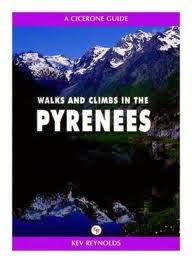
3. Best For the Backpack: Walks and Climbs in the Pyrenees. Kev Reynolds (2008)

Covers the High Pyrenees from Pic D'Anie to Pic Carlit - ignoring the parts of the chain closest to the Atlantic and Mediterranean. Includes 170 routes which are mostly day walks but there are several  2 and 3 day treks. Also includes routes along a section of a section of  the Haute Randonnée Pyrénéan (HRP) of 24 days broken down into 3 stages. There are no walking maps.
 
"For the walker and trekker, the range has just about everything."

Concise. Pocket sIzed. Cover photo is 2001 edition


4. Best For History: The Man Who Married a Mountain. Rosemary Bailey (2005)

Rosemary Bailey takes a journey through the Pyrenees. In the process we learn more about this beautiful region and the lives of some of the colourful characters who explored and popularised the area in the nineteenth century. Foremost among them is Count Henry Russel (a friend of Charles Packe) who had an astonishing relationsip with the highest peak on the French side of the chain – the Vignemale.

‘Of all those that sought the Sublime and the Beautiful in the Pyrenees, it was Henry Russel who found it.’


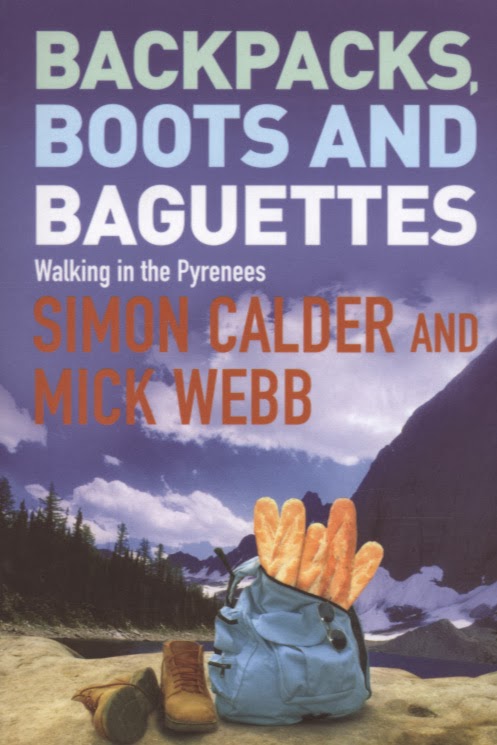
5. Best For Humour: Backpacks, Boots and Baguettes. Simon Calder and Mick Webb (2004)

A humerous, informative account of completing the GR10 Traverse across the Pyrenees from Atalantic to Mediterranean. A good introduction to the Pyrenees.

 ‘..if there is one thing more exciting than finding your path it has to be the joy of making your own one’


6. Best For Walking: The Pyrenees. Kev Reynolds. (2004)

A more user friendly version of Walks and Climbs with more information, better maps and more photos.

'A magical range of mountains'

'The finest trekking in all Europe is to be found in the Pyrenees'


7. Best For The GR10: Trekking in the Pyrenees. Douglas Streatfeld-James. (1998)

A guide that covers the whole GR10 - one of several long distance paths that traverse the  Pyrenean Chain. 80 detailed maps showing timings, accommodation and points of interest. Good language section and includes some historical and geographical background as well as information on flora and fauna.

'This is an area of awe-inspiring beauty'


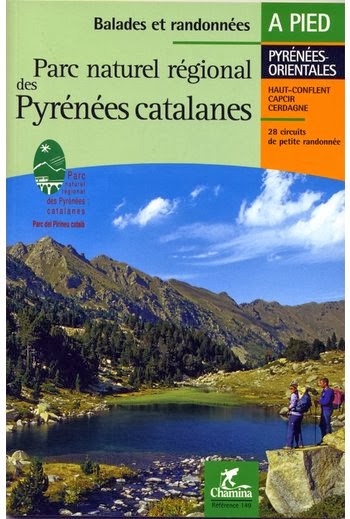
8. Best For The Eastern Pyrenees: Parc Naturel Régional des Pyrenees Catalanes

A guide book (in French) that concentrates just on the Catalan Pyrenees Regional Nature Park found in the Eastern Pyrenees closest to the Mediterranean - the sunniest part of the chain. 26 day walks and 2 weekend treks. Route description plus 1:25000 IGN map extract. Includes much useful general information on the geology, history, fauna and architecture of the area.

'A paradise for the walker.....there is something for all tastes and all levels'


9. Best For the GR11: Through The Spanish Pyrenees GR11. Paul Lucia. (2010 4th Ed.)


The GR11 or 'La Senda' (The Track) is the Sapnish equivalent of the GR10 and this is the only English language guide to the route. A coast to coast traverse of the Pyrenees on the Spanish side of the chain.


10. Best For the HRP: The Pyrenean Haute Route. Tom Joosten. (Reprinted 2012)
Unlike the GR10 and GR11 the Haute Route crosses the French-Spanish border many times, exploring both sides of the mountain range and staying as close as possible to the main ridge of the Pyrenees. 
The classic text is by George Veron (Pyrenees High Level Route 1991) the Frenchman who laid the foundations for the hardest of the coast to coast traverse routes but it is out of print. 
Joosten's Cicerone guide is argueably as good. He walked every stage of the Haute Route more than once and all the stages in the high mountains at least three times.
800km broken down into 42 stages including 500 GPS Waypoints to help with navigation..


Want help planning your perfect Pyrenees mountain adventure? Have a look at the Pyrenees Mountain Adventure website: www.pyreneesmountainadventure.com 

The Pyrenees Mountain Adventure team look forward to hearing from you soon.

Tuesday, April 24, 2012

Top 10 Wilderness Films

Wilderness Matters! Here is my top 10 of wilderness films. Films that show the beauty of  wild places -  whether mountains , desert or the ocean but also encourage reflection on what they have to offer humankind and why they should be protected.

1. Sweetgrass.

Year: 2009. Director: Lucien Castaing-Taylor.

This film follows a group of shepherds/modern day cowboys driving a herd of sheep 300 km to summer pastures in the Beartooth Mountains of Montanna for the last time. The area is beautiful but harsh and the flock must be protected from  a variety of natural dangers (storms, wolves and bears). Put together from material shot over 3 summers, the film has no narration and no soundtrack.

http://sweetgrassthemovie.com/


2. Into The Wild
Year: 2007. Director: Sean Penn. 
Based on the life of Chris MacCandless. MacCandless grew up in a wealthy family and was gifted intellectually and athletically. He graduated from Emory University with Honours in 1990 and had plans to attend Harvard Law School. Soon afterwards however, he gave 24,000 dollars  that he had saved to Oxfam and went ‘walkabout’, severing all contact with his family and friends, creating a new life for himself tramping around the US. In April 1992 he hitchhiked to Alaska and walked alone into the wild. Five months later his decomposed body was found by a hunter. A lost man in a lost world searching for answers.


3. Grizzly Man

Year: 2005. Director: Werner Herzog.

A documentary  about grizzly bear activists Timothy Treadwell and Amie Huguenard. They were both  killed in October of 2003 by a grizzly bear. Timothy had lived among the grizzlies in Alaska for 13 summers.
" Behind me is Ed and Rowdy, members of an up-and-coming sub-adult gang. They're challenging everything, including me. Goes with the territory. If I show weakness, if I retreat, I may be hurt, I may be killed."

http://www.grizzlyman.com/timothy-treadwell/


4. The Last Trapper

Year: 2004. Director: Nicolas Vanier.

The film is set in the Yukon in Alaska and is based on the life of a real fur trapper called Norman Winter who plays himself.  Winter, 50, is a modern-day Jeremiah Johnson living off what he hunts and fishes, making most of what he needs with his own two hands, including his log cabin. Not a true documentary - the scenes acted out are based on events in Winter's own life.


5. Alone in the Wilderness.
Year: 2003. Director: Bob Swerer.
This is the first in a series of films that shows how Dick Proenneke lived his dream of being self sufficient in the Alaska Wilderness.
"Thousands have had such dreams, but Dick Proenneke lived them. He found a place, built a cabin, and stayed to become part of the country."  Proenneke filmed his own adventures, and Swerer later turned the footage into a film.
http://aloneinthewilderness.com/

6. Dances With Wolves
Year: 1990. Director: Kevin Costner. An 'eco -western' directed and starring Kevin Costner. The fictional story follows John Dunbar an officer in the US Cavalry who has the choice of any posting he wants and chooses the 'Far West' frontier, because he wants " to see it before it's gone." Dunbar meets and becomes friends with a Sioux tribe of Native North Americans. He discovers their culture and the respect they have for the land.


7. The Big Blue

Year: 1988. Director: Luc Besson.

The fictional story follows the path of two 'free divers' who first meet as children. Both have a deep bond with the ocean.


8. Never Cry Wolf

Year: 1983. Director: Carroll Ballard

This film dramatizes the true story of Farley Mowat, a government researcher sent to the Canadian tundra area to collect data about how the wolf population was allegedly harming the caribou herds. While studying the wolves and  learning more about them and the harsh environment they live in, Mowat has his old beliefs and prejudices about wolves and the threat they pose challenged.


9. Jeremiah Johnson
Year: 1972. Director: Sydney Pollack.  
A war weary veteran of the conflict in Mexico (1846-48), Jeremiah Johnson (played by Robert Redford) seeks to escape from his existing life and find peace and refuge on the frontier of the Western U.S. He becomes a mountain man supporting himself in the Rocky Mountains as a trapper.


10. Walkabout
Year: 1971. Director: Nicolas Roeg. 
Two upper class English children find themselves stranded in the 'alien' Australian outback. They survive with the help of an aboriginal/Native Australian boy on walkabout and finally manage to return to 'civilisation'.